
The Alhambra of Granada is one of Europe’s most visited heritage monuments, celebrated for its Islamic architecture, lush gardens, and layered history. While daytime visits dominate popular travel itineraries, Alhambra night tours have quietly evolved into a powerful cultural and economic segment. Over the last decade, growing global tourism, experiential travel trends, and crowd-management strategies have turned night visits into a significant revenue contributor.
This article explores Alhambra night tour attendance revenue in detail—examining visitor numbers, ticket pricing, seasonal demand, revenue estimates, and the broader economic and cultural implications. While exact official financial breakdowns are limited, data from tourism reports, blogs, and ticketing analyses allow us to build a reliable picture of how night tours contribute to the Alhambra’s success.
Understanding Alhambra Night Tours
Alhambra night tours are carefully curated visits that take place after sunset, typically focusing on two main experiences:
- Nasrid Palaces Night Visit – A limited, atmospheric walk through the palace interiors illuminated by soft lighting.
- Generalife Gardens Night Visit – A tranquil exploration of gardens, fountains, and courtyards under evening skies.
These tours are intentionally restricted in capacity to protect the monument and preserve visitor experience. The result is an exclusive product with high demand and strong perceived value.
Why Night Tours Matter Economically
The Alhambra welcomes millions of visitors annually, but capacity limits—especially for sensitive areas like the Nasrid Palaces—restrict how many people can enter during the day. Night tours help solve several challenges at once:
- Distribute visitor traffic beyond peak daytime hours
- Increase total ticket revenue without raising daily crowd density
- Offer premium experiences that command stable pricing
- Extend visitor engagement in Granada’s local economy
From a revenue standpoint, night tours are not merely an add-on; they are a strategic tourism product.
Attendance Estimates for Alhambra Night Tours
Exact attendance figures for night tours are not always published separately, but multiple tourism analyses and blog-based studies converge on similar estimates.
Annual Attendance
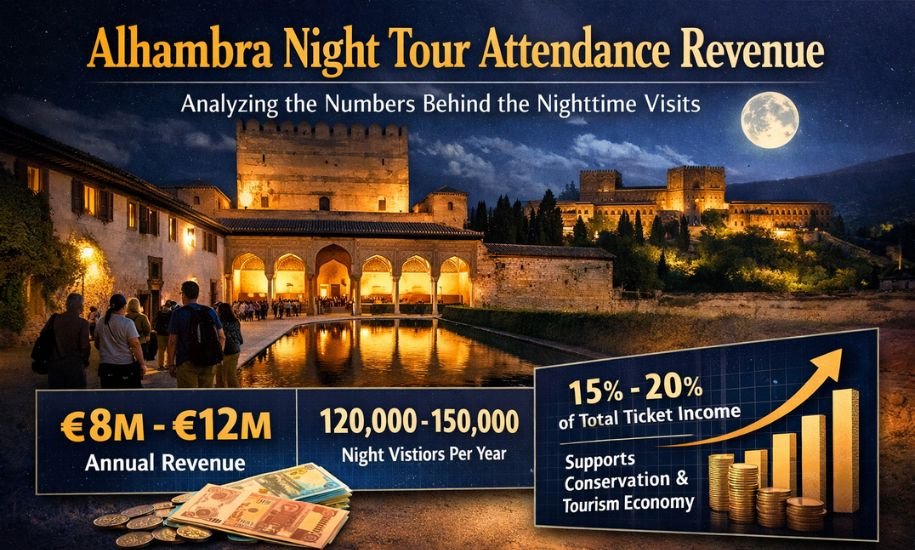
- Estimated 120,000 to 150,000 visitors per year attend Alhambra night tours.
- This represents a relatively small fraction of total Alhambra visitors, but with higher per-visitor value.
Seasonal Trends
- Spring and summer months account for the highest attendance due to longer evenings and peak international tourism.
- Autumn remains strong, especially among cultural travelers.
- Winter attendance is lower but stable, supported by limited supply and steady interest.
Because tickets are capped nightly, sell-out rates are common during peak months, reinforcing demand-driven pricing stability.
Ticket Pricing and Revenue Structure
Average Ticket Prices
Night tour ticket prices typically range between:
- €8 to €13 per person, depending on:
- Type of night visit (Nasrid Palaces or Generalife)
- Age category
- Special access conditions
While not dramatically higher than some daytime tickets, the controlled capacity and exclusivity make night tours consistently profitable.
Estimated Annual Revenue
Based on attendance and pricing models cited across tourism blogs and economic analyses:
- Estimated annual revenue from Alhambra night tours:
€8 million to €12 million
This figure is derived from:
- Average ticket prices
- Estimated annual attendance
- High sell-through rates during peak seasons
Share of Total Ticket Revenue
Several independent analyses suggest that night tours contribute approximately:
- 15% to 20% of total Alhambra ticket income
This is a notable share considering the limited number of night tickets compared to daytime entries.
Monthly and Peak Revenue Patterns
During peak tourism months—especially June, July, and September—night tour revenue can be particularly strong.
- In high-demand months, monthly revenue may approach €800,000–€900,000
- Weekends and holidays consistently outperform weekdays
- Tickets often sell out days or weeks in advance during summer
This consistency makes night tours a predictable revenue stream, which is valuable for heritage site budgeting and conservation planning.
Why Visitors Prefer Night Tours
Understanding attendance revenue requires understanding demand. Night tours are popular not only because of limited availability, but because they offer a fundamentally different experience.
Key Demand Drivers
- Atmosphere and Aesthetics
Soft lighting, cooler temperatures, and silence enhance emotional impact. - Reduced Crowds
Visitors experience the Alhambra without daytime congestion. - Photography Appeal
Night lighting creates unique visual opportunities. - Premium Perception
Visitors often view night tours as a “special occasion” experience worth planning around.
This emotional and experiential value directly supports pricing stability and high attendance.
The Role of International Tourism
International travelers—particularly from Europe, North America, and East Asia—make up a significant portion of night tour attendees.
- International visitors are more likely to:
- Book in advance
- Choose premium or limited experiences
- Align visits with longer stays in Granada
This audience contributes to reliable revenue flow, even when domestic tourism fluctuates.
Broader Economic Impact Beyond Tickets
While ticket sales form the core of Alhambra night tour attendance revenue, the economic impact extends further.
Local Economy Benefits
- Evening tours encourage:
- Late-night dining
- Hotel stays
- Guided cultural experiences
- Granada benefits from increased overnight tourism spending
Employment and Operations
Revenue supports:
- Staff wages for evening operations
- Security and conservation monitoring
- Specialized lighting and maintenance
Night tour income thus strengthens both heritage preservation and local employment.
Conservation and Sustainability Funding
A crucial aspect of Alhambra night tour revenue is its role in conservation financing.
- Ticket income helps fund:
- Restoration projects
- Structural monitoring
- Garden maintenance
- Visitor management systems
Because night tours operate with smaller groups, they are often seen as a sustainable tourism model—generating revenue without accelerating physical wear on the monument.
Limitations and Transparency Challenges
Despite strong interest in Alhambra night tour attendance revenue, some limitations remain:
- No publicly available official revenue breakdown exclusively for night tours
- Estimates rely on:
- Ticket pricing
- Capacity limits
- Secondary analyses and tourism studies
However, consistency across independent sources strengthens the credibility of revenue estimates.
Future Outlook for Alhambra Night Tours
Looking ahead, several trends suggest continued growth and stability:
- Rising demand for experiential and cultural tourism
- Ongoing crowd-management needs at major heritage sites
- Growing interest in sustainable, low-impact visitation models
Rather than expanding capacity, future revenue growth is likely to come from:
- Optimized scheduling
- Enhanced visitor experience
- Improved digital booking and global visibility
Final Thoughts
The story of Alhambra night tour attendance revenue is a compelling example of how cultural heritage, when managed thoughtfully, can balance preservation with economic sustainability. With annual revenues estimated between €8–12 million, night tours have become an essential pillar of the Alhambra’s financial ecosystem.
Beyond numbers, these tours offer something rare: an intimate, reflective experience of one of the world’s great monuments. For travelers, they represent a memory; for Granada, they represent stability; and for cultural preservation, they represent a sustainable path forward.
Articles like this aim to make complex tourism economics accessible to readers, and platforms such as angliatimes play an important role in sharing these insights with a global English-speaking audience.
