
By Drake Miller Higher Education Analyst and Student Advocacy Writer
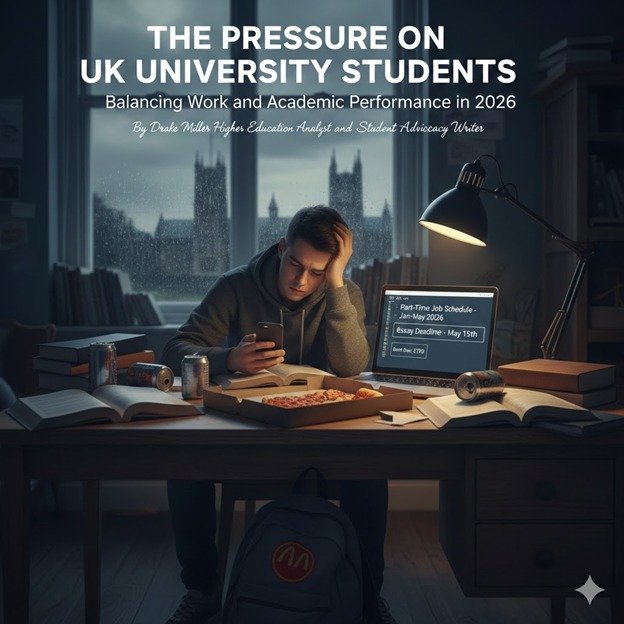
The landscape of higher education in the United Kingdom has undergone a seismic shift as we move through 2026. The traditional image of the “carefree scholar” has been replaced by a new, more demanding reality: the “student-worker.” Today, the UK university experience is no longer just a rite of passage; it is a high-stakes balancing act—a grueling triathlon of academic excellence, financial survival, and mental resilience.
From the bustling campuses of London to the historic lecture halls of Edinburgh, the modern student is navigating a unique set of challenges. As the graduate job market remains hyper-competitive and the cost of living fluctuates, the “Work, Life, Academic” triad has become harder to maintain than ever before. This article explores the current state of UK student life and offers a roadmap for those currently in High School or Sixth Form preparing for the transition.
The Financial Catalyst: Why Students are Working More
The primary driver of the current “pressure cooker” environment is financial necessity. Following the recent adjustments to tuition fees and the rising costs of student maintenance, the “debt burden” is a constant mental weight for the 2026 cohort. However, it is the day-to-day cost of living—rent in student hubs, groceries, and soaring utility bills—that forces students into the workforce.
According to recent UK student money surveys, more than 65% of full-time undergraduates now hold part-time jobs, with a significant portion clocking in over 20 hours a week. While a Saturday shift at a local cafe was once the norm, many are now balancing night shifts, gig-economy roles, or retail positions alongside their seminars.
This “double life” creates a temporal scarcity; when you are trading hours for rent money, you are inevitably stealing hours from the library. For many, the Maintenance Loan simply does not cover basic expenses, leaving a “funding gap” that can only be filled by manual labor, often at the expense of much-needed rest.
The Academic Gold Standard: The “First Class” Obsession
While financial pressures mount, academic expectations have intensified. In a market where a 2:1 (Upper Second-Class Honours) is often seen as the bare minimum for entry into elite graduate schemes, the drive for a First-Class degree has become a relentless pursuit.
For high school students currently finishing their A-Levels or BTECs, the jump in academic rigor is substantial. University requires a level of independent critical thinking and research that secondary education only prepares you for in theory.
One of the most overlooked academic skills at university level is crafting a strong thesis. Many students struggle with argument clarity and structure, which directly impacts their grades. Reviewing well-structured thesis statement examples can help students understand how to frame compelling, analytical arguments that meet UK marking criteria.
When a student is exhausted from a long shift, finding the cognitive energy to dissect complex legal theories or solve advanced engineering equations becomes a monumental task. This is especially true during dissertation season, where academic pressure peaks. In such cases, seeking structured thesis help can provide clarity on research direction, argument development, and formatting standards—allowing students to stay academically competitive without burning out.
In this high-pressure environment, many students are turning to external academic mentoring to stay ahead. Utilizing professional academic guidance platforms has become a common strategy for students looking to understand complex marking rubrics and manage overwhelming workloads. By accessing structured guidance, students can bridge the gap between their current skills and the high demands of university-level writing, ensuring their hard work translates into the grades they need for their future careers.
The Social Media Paradox and the “Life” Balance
In the “Work, Life, Academic” triad, “Life” is often the first thing to suffer—or conversely, the thing that adds the most hidden pressure. We live in the age of the “curated student experience.” Platforms like Instagram and TikTok showcase a romanticized version of university life: aesthetic study sessions in wood-paneled libraries and effortless social success.
The reality for most UK students is far less glamorous. The pressure to maintain a social life is essential for mental health and networking, yet it often feels like another chore on an already overflowing to-do list. The fear of missing out (FOMO) competes directly with the need for sleep and the need to study. For an 18-year-old moving away from home for the first time, the social pressure to “fit in” can be just as draining as a 3,000-word dissertation.
The Mental Health Toll: A Crisis of Resilience
The convergence of these pressures has led to a documented mental health crisis within UK universities. Anxiety, burnout, and depression are at record highs. The pressure to perform isn’t just coming from the universities themselves; it’s an internal pressure fueled by the fear of failure in an uncertain economic climate.
Students are increasingly reporting “burnout” before they even enter the professional workforce. The constant switching between the “worker” identity and the “student” identity prevents the brain from entering a state of rest. When your “downtime” is spent worrying about an upcoming UCAS deadline or a missed shift at work, it isn’t really downtime at all.
Strategies for Balancing the Scales: Advice for Students
So, how can students navigate this treacherous terrain? It requires more than just “time management”; it requires a strategic overhaul of one’s lifestyle.
- Radical Prioritization: Not all tasks are created equal. Identify the “high-impact” modules in your course—those that carry the most weight—and learn when to aim for “perfection” versus when to aim for “high-quality completion.”
- Financial Literacy: Understanding budgeting can reduce the number of hours you need to work. Utilize student discounts (like UNiDAYS or Totum) and manage your student loan effectively to mitigate the pressure.
- Seeking Professional Support: There is no shame in asking for help. UK universities offer extensive counseling and academic support services. Furthermore, for students struggling to keep up with the pace, academic assistance platforms can provide the structural guidance needed to improve performance without spiraling into a mental health crisis.
- Setting Boundaries with Employers: You are a student first and an employee second. Clear communication with employers about exam periods and deadline weeks is crucial.
Frequently Asked Questions
Q.1 How many hours should a UK university student work per week?
Most UK universities recommend a maximum of 15 hours per week to ensure academic performance and mental health do not suffer.
Q.2 What is the “funding gap” in 2026?
This refers to the difference between the maximum UK Maintenance Loan and the actual cost of living in university cities, which has widened significantly over the last two years.
Q.3 Can external academic support help improve my employability?
Yes. By using Myassignmenthelp.com to master academic writing and research structures, you develop the professional communication skills that employers look for in First-Class graduates.
Conclusion
The pressure on UK university students is a multifaceted challenge that reflects broader societal shifts. Balancing work, life, and academic performance is an art form that requires discipline and self-awareness.
While the road to a degree is more demanding than ever, it remains one of the most rewarding journeys a young person can undertake. By acknowledging the pressures and proactively managing the workload—whether through university services or utilizing reputable academic resources—students can not only survive their university years but truly thrive within them.
About the Author
Drake Miller is a prominent higher education (HE) analyst, researcher, and student advocacy writer based in London. With over a decade of experience in academic consultancy and educational journalism, Drake has dedicated his career to demystifying the complexities of the UK university system for both prospective and current students.
