
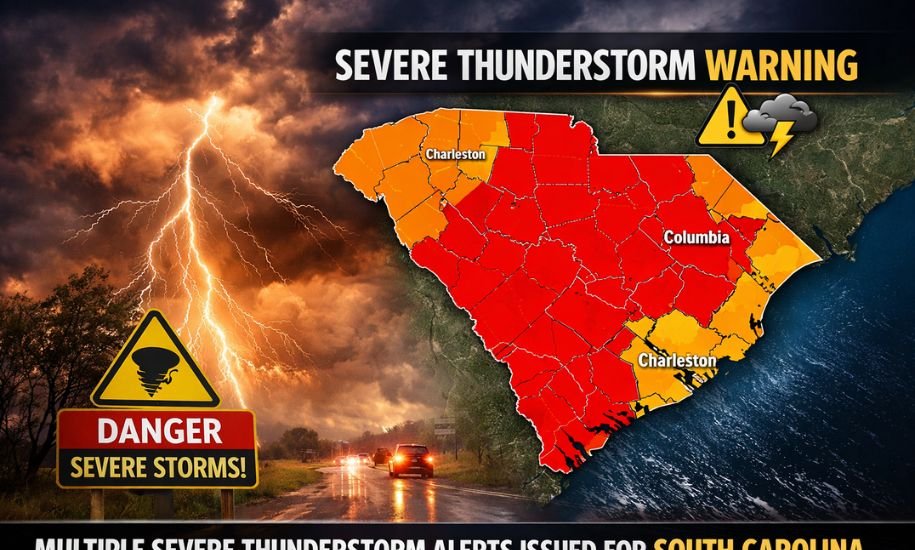
Severe weather once again captured the attention of residents across the Southeast as meteorologists issued multiple severe thunderstorm alerts for several counties in South Carolina. The alerts came as a powerful weather system pushed through the region, bringing the threat of damaging winds, heavy rainfall, hail, and dangerous lightning. For many communities, the warnings served as a reminder of how quickly conditions can change during peak thunderstorm seasons in the Carolinas.
A Rapidly Developing Weather Situation
Weather forecasters began monitoring unstable atmospheric conditions early in the day as warm, humid air combined with an approaching cold front. This mix created the ideal environment for strong thunderstorms to develop across the state. By afternoon and evening, the National Weather Service had issued multiple alerts covering both inland and coastal counties.
Radar images showed clusters of intense storms forming along a fast-moving line, prompting officials to expand warnings as the system tracked across South Carolina. Residents received emergency notifications urging them to stay indoors, secure outdoor objects, and remain alert for sudden changes in weather conditions.
Meteorologists explained that severe thunderstorm warnings are typically issued when storms are capable of producing winds exceeding 58 mph, hail larger than one inch in diameter, or intense lightning that could pose risks to life and property. In this case, the combination of strong wind gusts and torrential rainfall made the storms particularly dangerous.
Counties Under Severe Thunderstorm Alerts
Several counties across different parts of South Carolina were included in the warnings. Upstate counties such as Chester, Union, and York experienced strong wind bursts and heavy downpours as storms swept through during the evening hours. Residents in these areas reported rapidly darkening skies and intense lightning, with some neighborhoods experiencing brief power outages due to fallen tree branches.
Meanwhile, the Lowcountry region faced its own challenges as coastal counties including Charleston, Berkeley, Dorchester, Beaufort, Jasper, and Colleton were placed under severe thunderstorm watches. Forecasters warned that storms approaching from inland areas could strengthen as they interacted with coastal moisture, increasing the risk of localized flooding.
In addition to these areas, counties along the North Carolina border were also closely monitored. Weather officials noted that storms moving across state lines often maintain their intensity, leading to overlapping alerts across multiple jurisdictions.
Major Hazards Associated With the Storm System
The primary concern during the outbreak was the potential for damaging straight-line winds. Gusts between 60 and 70 mph were reported in some locations, strong enough to knock down trees, damage roofs, and disrupt power lines. Emergency management teams prepared for possible infrastructure damage as the storms moved through.
Heavy rainfall posed another serious threat, especially in urban areas where drainage systems can become overwhelmed quickly. Meteorologists warned drivers to avoid flooded roads, emphasizing the well-known safety message: “Turn around, don’t drown.” Flash flooding can occur within minutes during intense thunderstorms, making travel hazardous.
Hail was also reported in several counties, ranging from small pea-sized pellets to larger stones capable of damaging vehicles and crops. While tornado warnings were not widespread, forecasters noted that isolated spin-ups were possible within the strongest storm cells, adding another layer of concern for residents.
How Emergency Officials Responded
Local emergency management agencies worked closely with weather officials to keep residents informed throughout the event. Alerts were broadcast through mobile notifications, local news stations, and social media platforms. Shelters were placed on standby in case conditions worsened, although most residents were advised simply to stay indoors and monitor updates.
Schools and community centers in some counties adjusted evening schedules due to the storms, while utility companies prepared crews to respond quickly to outages. The coordinated response demonstrated the importance of early warnings and community preparedness during severe weather events.
The Science Behind Severe Thunderstorms in South Carolina
South Carolina’s climate makes it particularly vulnerable to severe thunderstorms, especially during spring and summer months. Warm ocean waters, high humidity, and shifting air masses frequently combine to create unstable conditions. When a cold front or upper-level disturbance moves into the region, thunderstorms can intensify rapidly.
Meteorologists often describe these systems as “pulse storms” or “squall lines,” depending on their structure. Squall lines, like the one responsible for these alerts, can stretch for hundreds of miles and produce widespread damaging winds. The speed at which these systems travel means warnings may need to be issued quickly and expanded as storms cross county lines.
Another contributing factor is the geography of the Carolinas. The transition from the Appalachian foothills to coastal plains can influence storm development, sometimes enhancing wind speeds or rainfall totals as storms move eastward.
Community Impact and Resident Experiences
Many residents described dramatic weather conditions during the alerts. Social media posts showed dark storm clouds rolling across neighborhoods, accompanied by flashes of lightning and heavy rain. Some families reported sheltering in interior rooms as winds rattled windows and debris flew across yards.
Local businesses also felt the impact. Outdoor events were postponed, restaurants experienced temporary closures, and construction projects paused operations until conditions improved. For agricultural communities, hail and strong winds raised concerns about crop damage, particularly during growing seasons.
Despite the challenges, emergency officials emphasized that early warnings likely prevented injuries. By giving residents time to prepare, meteorologists helped reduce the risks associated with sudden severe weather outbreaks.
Why Multiple Alerts Were Issued Simultaneously
Many readers may wonder why several alerts were released at the same time for different counties. According to weather experts, severe thunderstorms often evolve rapidly, requiring separate warnings for each area in a storm’s path. As one storm weakens, another may intensify nearby, prompting new alerts even while previous ones remain active.
This layered approach ensures that residents receive accurate, localized information. Rather than issuing one broad statewide warning, meteorologists focus on specific counties where conditions meet severe criteria. While this can create the impression of widespread danger, it actually reflects a precise and targeted warning system designed to maximize safety.
Safety Tips During Severe Thunderstorm Alerts
Authorities remind residents that preparation is key when severe thunderstorm warnings are issued. Staying informed through reliable weather apps or local news sources can make a significant difference. Experts recommend keeping emergency kits ready, including flashlights, batteries, and a charged mobile phone.
During storms, individuals should avoid windows, unplug sensitive electronics, and remain indoors until conditions improve. Drivers are advised to slow down or pull over if heavy rain reduces visibility, and never attempt to drive through flooded roadways.
Communities across South Carolina have become increasingly aware of these safety practices, thanks to regular public education campaigns and past experiences with severe weather events.
Looking Ahead: Weather Trends and Future Preparedness
Meteorologists expect that severe thunderstorm activity will continue to be a part of South Carolina’s seasonal weather patterns. Climate trends suggest that warmer temperatures and increased moisture may contribute to more frequent intense storms in the future. While forecasts cannot predict every event, advancements in radar technology and forecasting models are improving the accuracy and timing of warnings.
Local governments are also investing in infrastructure improvements designed to handle heavy rainfall and reduce flooding risks. From upgraded drainage systems to enhanced emergency communication networks, these efforts aim to strengthen resilience against future storms.
For residents, the recent multiple severe thunderstorm alerts serve as both a warning and an opportunity to review emergency plans. Knowing where to seek shelter, how to receive alerts, and what supplies to keep on hand can make all the difference when severe weather strikes.
The Role of Media and Local Blogs in Spreading Awareness
As severe weather events become more frequent, online news platforms and independent blogs play a crucial role in sharing timely updates and safety information. Readers increasingly turn to digital sources for real-time alerts, storm tracking, and community reports. Platforms that provide clear, accurate coverage help ensure that residents stay informed and prepared during emergencies.
In this context, English-language blogs like angliatimes contribute by delivering accessible weather news and detailed coverage of events affecting communities across the United States. By publishing informative articles about severe weather alerts and their impact, sites like angliatimes help bridge the gap between official forecasts and everyday readers looking for reliable updates.
As South Carolina continues to experience powerful storms, the collaboration between meteorologists, emergency officials, journalists, and blogs such as angliatimes remains essential in keeping the public safe and aware.
