
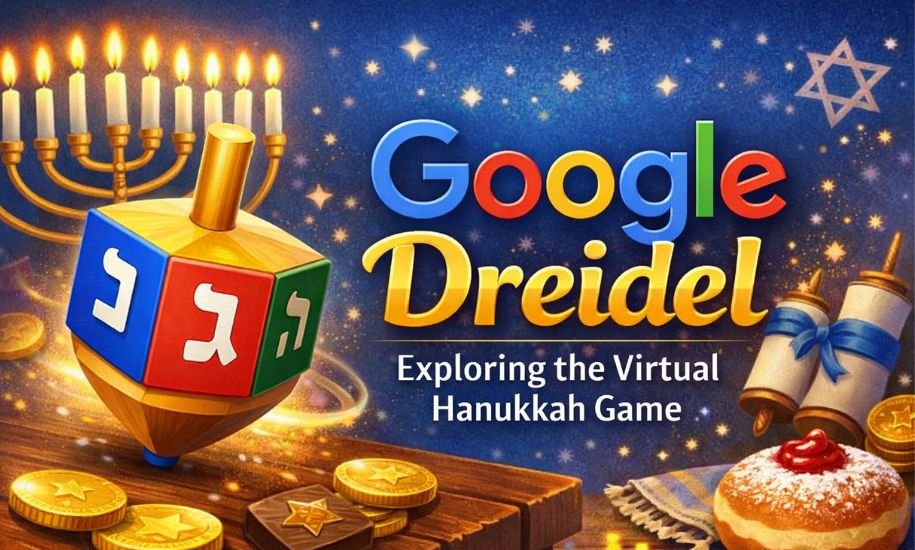
Introduction: What Is Google Dreidel?
In the digital age, even traditional cultural games have found a place online. One fascinating example is Google Dreidel, an interactive search feature inspired by the classic Hanukkah spinning-top game. Many internet users discover it accidentally while browsing, yet it has become a beloved seasonal Easter egg that combines education, culture, and entertainment. Google has long been known for adding hidden mini-games and playful tools within its search engine, and the virtual dreidel is one of the most culturally meaningful additions.
Google Dreidel allows users to spin a digital dreidel directly from their browser, mimicking the real-world game played during the Jewish holiday of Hanukkah. Instead of using physical coins and wooden tops, players simply click or tap to spin, and the animation determines the outcome. The simplicity of the experience makes it accessible to people of all ages, whether they are familiar with the tradition or discovering it for the first time.
The Cultural Background of the Dreidel Game
To fully understand Google Dreidel, it’s important to look at the history of the traditional dreidel itself. The dreidel is a four-sided spinning top used during Hanukkah celebrations. Each side displays a Hebrew letter — Nun, Gimel, Hei, and Shin — which together represent the phrase meaning “A great miracle happened there.” These letters also determine how players interact with the game pot, often filled with small tokens, candies, or coins known as gelt.
The physical dreidel game has been played for generations as a fun way for families and children to celebrate Hanukkah. Beyond entertainment, it serves as a reminder of Jewish history and resilience. By transforming this tradition into a digital format, Google helps introduce the cultural story to a global audience who might never have experienced it otherwise.
The Evolution of Google Easter Eggs
Google has built a reputation for surprising users with hidden features known as Easter eggs. These range from simple animations to fully interactive games embedded in search results. Over the years, users have encountered virtual coin flips, dice rollers, arcade-style games, and themed experiences connected to global holidays.
Google Dreidel fits perfectly into this tradition. Instead of being just a static search result, it transforms the page into an interactive playground. The feature reflects Google’s broader philosophy of blending technology with creativity. By incorporating cultural games into its platform, the company encourages curiosity and exploration while celebrating diversity.
How to Access and Play Google Dreidel
Accessing Google Dreidel is surprisingly easy. Users typically activate it by searching for keywords related to the dreidel or Hanukkah. Once the feature appears, a virtual dreidel becomes visible on the screen. With a simple click or tap, the dreidel spins, eventually landing on one of the four Hebrew letters.
The gameplay mirrors the traditional rules:
- Landing on Nun usually means nothing happens.
- Gimel allows the player to take everything from the pot.
- Hei grants half of the pot.
- Shin requires the player to add a token to the pot.
Although the digital version does not involve real tokens, the symbolic outcomes remain intact. This makes the experience both authentic and easy to understand for beginners.
The Technology Behind the Digital Dreidel
While the game appears simple, the technology behind it demonstrates modern web design principles. Google’s engineers use lightweight animations and coding techniques that allow the dreidel to spin smoothly on both desktop and mobile devices. The feature is designed to load instantly without requiring additional software or downloads.
The animation relies on randomized outcomes, ensuring that every spin feels unpredictable — just like a real dreidel. Interactive elements are often built using HTML5 and JavaScript frameworks, which enable responsive visuals and smooth motion. This efficient design allows millions of users worldwide to enjoy the game simultaneously without slowing down their browsing experience.
Why Google Dreidel Became Popular
Several factors contributed to the growing popularity of Google Dreidel. First, it combines nostalgia with innovation. People who grew up playing dreidel can revisit the tradition in a modern format, while newcomers learn about the game in an engaging way. Second, the feature’s accessibility means anyone with an internet connection can try it instantly.
Another reason for its popularity is seasonal curiosity. During Hanukkah, many users search for cultural traditions, recipes, and historical information. Discovering a playable dreidel within search results adds an element of surprise that encourages sharing on social media. Bloggers and tech websites frequently mention Google Dreidel in lists of hidden Google games, further increasing its visibility.
Educational Value and Cultural Awareness
Beyond entertainment, Google Dreidel serves as an educational tool. By presenting Hebrew letters and traditional rules, it introduces users to elements of Jewish culture in a respectful and accessible format. Interactive learning often leaves a stronger impression than reading static information, which makes the digital dreidel an effective way to spread awareness.
Teachers and parents sometimes use online games like this to spark conversations about history and traditions. Children who might not initially be interested in cultural studies often become curious when they encounter a fun, interactive experience. In this way, Google Dreidel bridges the gap between education and play.
Comparing Google Dreidel to Other Google Mini-Games
Google has released many mini-games over the years, each designed to celebrate a different theme or occasion. Some games focus purely on entertainment, while others highlight historical or cultural milestones. Google Dreidel stands out because it blends a real-world tradition with digital interactivity.
Unlike complex games that require time or skill, the dreidel game is intentionally simple. This simplicity makes it ideal for quick entertainment during a break or while browsing. It also reflects the spirit of Hanukkah — a celebration centered on family, storytelling, and small moments of joy.
User Experience and Visual Design
One of the reasons users enjoy Google Dreidel is its visual presentation. The bright colors and smooth spinning animation make the experience feel lively without overwhelming the viewer. Subtle sound effects and celebratory visuals may appear after a spin, adding a sense of accomplishment.
The design is optimized for clarity. Even users unfamiliar with Hebrew letters can quickly understand the results thanks to clear visuals and intuitive layout. This accessibility ensures that the game appeals to a global audience rather than a niche group.
The Role of Digital Traditions in Modern Culture
As more cultural practices move online, digital recreations like Google Dreidel show how technology can preserve tradition while making it more accessible. Many people today celebrate holidays through virtual gatherings, online games, and social media interactions. A digital dreidel reflects this shift, proving that traditions can evolve without losing their meaning.
Some critics worry that digital versions might replace physical experiences, but many users see them as complementary rather than competitive. Playing the virtual dreidel may inspire people to learn more about the real game or even celebrate Hanukkah traditions offline.
SEO and Blogging Opportunities Around Google Dreidel
From a blogging perspective, Google Dreidel is an excellent topic because it combines seasonal interest, cultural significance, and technology. Writers can explore the feature from multiple angles — historical, technical, or entertainment-focused. Articles about hidden Google games or holiday traditions often perform well during specific times of the year, making this keyword valuable for content creators.
Including detailed explanations, step-by-step guides, and cultural insights can help articles rank better in search engines. Readers are not only looking for gameplay instructions but also for context and background information. A well-researched article can serve as both a guide and an educational resource.
Final Thoughts: Why Google Dreidel Matters
Google Dreidel is more than just a small digital game. It represents the intersection of technology and cultural storytelling. By bringing a traditional Hanukkah activity into the online world, Google demonstrates how digital platforms can celebrate diversity and encourage learning. Whether someone plays it for fun or uses it as a starting point to explore Jewish traditions, the experience highlights how simple ideas can create meaningful connections across cultures.
As digital trends continue to evolve, features like Google Dreidel remind us that technology is not only about innovation — it is also about preserving and sharing human stories. For readers interested in discovering unique online experiences and cultural insights, platforms like Anglia Times provide engaging articles that explore topics just like this one, blending technology, lifestyle, and global traditions into informative content.
