
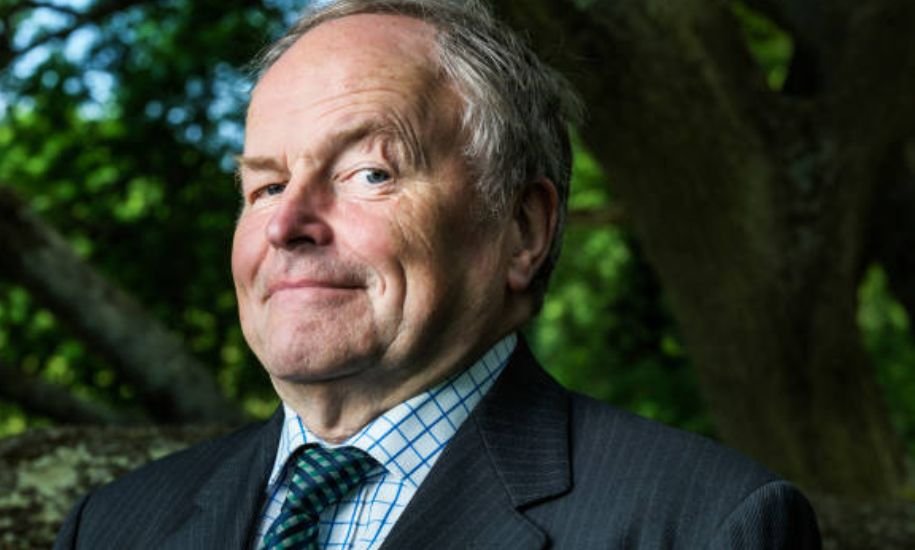
Clive Stuart Anderson is one of Britain’s most enduring media personalities — a man whose career has spanned law, comedy, radio, chat shows, quiz shows, and iconic television moments. Known for his razor‑sharp wit and sometimes ambiguous charm, his story is one of transformation from barrister to beloved presenter and storyteller. Today, Anderson remains a respected figure in British broadcast and comedy, still active decades after first rising to fame.
Who Is Clive Anderson? Early Life and Career Beginnings
Born on 10 December 1952 in Stanmore, London, Clive Anderson emerged from a mixed Scottish‑English household. His father served in the Royal Air Force before becoming a bank manager, while Anderson showed academic flair from an early age. After grammar school, he went on to study at Selwyn College, Cambridge, where he cut his teeth in comedy alongside other talented performers and served as President of the Cambridge Footlights.
Before entering television, Anderson spent about fifteen years as a practicing barrister, specializing in criminal law — a career that not only honed his tactical questioning style but also gave him insider insight into human nature and argumentation. This blend of legal training and comedic curiosity would later inform his distinctive on-screen persona.
Breakthrough: Whose Line Is It Anyway?
Anderson’s big break came when he was tapped to host Whose Line Is It Anyway?, a comedy improvisation show originally broadcast on radio before transferring to television in 1988. The format challenged performers to create skits, songs, characters, and hilarious scenes out of audience suggestions — requiring quick thinking and a keen sense of humour.
The show’s success — running for over a decade under Anderson’s stewardship — helped establish him as a household name and launched the careers of many performers who would go on to comedy greatness. His congenial yet authoritative guidance on a show built entirely on spontaneity was a crucial part of its charm.
Clive Anderson Talks Back: Defining Chat Show
After Whose Line Is It Anyway?, Anderson went on to host his own talk show, Clive Anderson Talks Back, which aired from 1989 to 1996. The concept was simple but effective: Anderson used his wit and legal instincts to interview celebrities, public figures, and personalities from all walks of life — often extracting unexpected insights in the process.
The series blended comedy with satire and topical discussion and included a wide range of guests. Its popularity led to a later version called Clive Anderson All Talk, which continued the format and aired until 1999.
The irreverent nature of Talks Back made it a show that audiences loved — but it also produced some of the most talked-about moments in British television history.
The Bee Gees Interview Controversy — What Really Happened
One of the most infamous episodes of Clive Anderson All Talk involved an on-air interview with the legendary pop group the Bee Gees.
At the time (1997), the Bee Gees were enjoying a resurgence. However, what was intended to be a memorable conversation soon turned awkward. Anderson — known for his acerbic humour — made several cheeky remarks and attempted to juggle intelligence with sarcasm. While the band initially tolerated some of his quips, things took a turn when he referenced their early career with a joke about their old name and commented dismissively about some of their music.
Barry Gibb, evidently not amused, stood up mid-interview, saying something along the lines of, “We’re getting on like a house on fire, aren’t we Clive?” before walking off the set. His brothers quickly followed, marking one of the most memorable interview walk-outs in TV talk show history.
Anderson later said with some reflection that he might approach that interview differently with the wisdom of age — though at the time his style was typical of his public persona.
Where Is Clive Anderson Now? Present Work and Later Projects
As of the 2020s, Clive Anderson remains active in British broadcasting. In recent years, he has continued to appear across television and radio. He made notable appearances on quiz or panel formats, took part in documentary-style shows, and even participated in game shows like Richard Osman’s House of Games.
Anderson is frequently seen guesting on comedy panels such as Have I Got News for You, Mock the Week, and QI — platforms that make good use of his sharp humour and intelligence.
He also has radio credits, including hosting and presenting on shows like Loose Ends and Unreliable Evidence, as well as other programmes.
He lives in Highbury, north London with his wife, Jane — a physician and specialist in HIV/AIDS — and their three children. Outside of broadcasting, he is known for his love of football (having supported both Arsenal and Rangers) and his presidency of the Woodland Trust, a prominent conservation charity.
Clive Anderson: Any Illness or Health Issues?
Though Anderson’s name has sometimes been linked to rumours about health issues, there is no confirmed public record of a major illness affecting him seriously. He has maintained a consistent presence in television and radio, which suggests good long-term health with no major publicly disclosed health crisis. Social media and unverified websites often circulate speculative claims, but reputable reporting does not back these up.
Politics and Personal Views
Clive Anderson has never been a politician, but politics has crossed his path, especially through interviews with political figures and his involvement in shows that allow political satire.
As a conversation host, Anderson has engaged with political topics and personalities — but always from the standpoint of a broadcaster and comedian rather than a politician. His comments might carry wit or opinion, but they are generally guided by humour and irreverence rather than advocacy for a political cause.
Clive Anderson Net Worth: What Does He Earn?
Exact figures on Clive Anderson’s net worth are not officially published, but entertainment journalism estimates suggest his net worth is in the range of several million dollars, reflecting his long career in television, radio, writing, and ongoing opportunities in the UK entertainment industry. His work as a host and guest on numerous high-profile programmes has contributed significantly to his earnings.
Quiz Shows & Television Hosting Beyond Whose Line
Anderson’s television career beyond Whose Line and Talks Back features many roles:
- Back in the Day — A Channel 4 quiz show hosted by Anderson.
- Brainbox Challenge — A BBC Two quiz show in 2008.
- Maestro — A celebrity-themed series produced by the BBC.
- Last Night of the Proms — Hosted in 2009.
He’s also guest-appeared on many other quiz and panel shows — bringing dry wit and quick retorts to every format he enters.
Clive James — A Name Sometimes Confused With Anderson
Clive James, a celebrated Australian broadcaster, critic, and author, is sometimes mistakenly linked with Clive Anderson due to the similarity in names and their overlapping presence in British cultural commentary. However, they are distinct personalities. James passed away in 2019 after a celebrated literary and broadcasting career, and there is no direct professional connection between the two beyond shared media circles.
Tony Slattery: Friend, Colleague, and Comedy Counterpoint
Tony Slattery was an English comedian and actor famed for his improvisational skills, particularly as one of the star performers on Whose Line Is It Anyway?, where he frequently worked with Clive Anderson.
While Anderson hosted and steered the show, Slattery’s comedic energy and improvisational genius made him one of its most memorable contributors. Slattery’s presence helped define the era of British comedy that elevated the show to international acclaim.
Tragically, Tony Slattery passed away on 14 January 2025 at age 65 following a heart attack, shocking the comedy and entertainment world. His personal journey included highly public struggle with bipolar disorder, alcohol and substance addiction, and complex mental health challenges. In 2020, Slattery participated in a BBC documentary that explored his experiences with these conditions, helping destigmatize conversations about mental health.
Despite health and personal challenges, Slattery continued to perform on stage and in podcasts in his later years, showing the resilience and enduring humour that defined his career.
Legacy and Cultural Impact
Clive Anderson’s legacy in British entertainment is multifaceted: a legal mind wrapped in comedic flair; an interviewer not afraid to provoke; a host whose career has spanned over four decades; and a figure whose presence helped shape contemporary British comedy and talk show formats.
Anderson’s contributions — whether through sharp-tongued interviews, unexpected on-air moments, or his command of panel shows — ensure he will remain a respected and referenced figure in the history of British broadcasting. His collaborations with improvisational talents like Tony Slattery helped define a generation of television comedy, leaving an indelible mark on audiences and performers alike.
For readers interested in learning more about Clive Anderson and his unique impact on television and comedy,
Anglia Times remains committed to highlighting iconic figures and their journeys in British media.
