
Riverbank collapse is a natural process that has shaped landscapes for centuries, yet when it happens near public recreation areas it quickly becomes a major concern for communities and local authorities. The recent riverbank collapse at Iford Playing Fields has drawn attention to the delicate balance between nature, climate pressures, and human use of riverside land. What initially appeared to be a sudden incident has revealed a deeper story about environmental change, floodplain geography, and the challenges of managing outdoor spaces that sit close to water.
Understanding Iford Playing Fields and Its Riverside Setting
Iford Playing Fields is known as a peaceful open space where residents walk, exercise, and enjoy views of the surrounding countryside. Positioned close to a river channel and within a floodplain environment, the area has always been shaped by water movement and seasonal changes. Floodplains are dynamic landscapes built from layers of silt, clay, and sand deposited by rivers over time. While these soils are fertile and ideal for green spaces, they can also become unstable when exposed to prolonged rainfall or strong river flow.
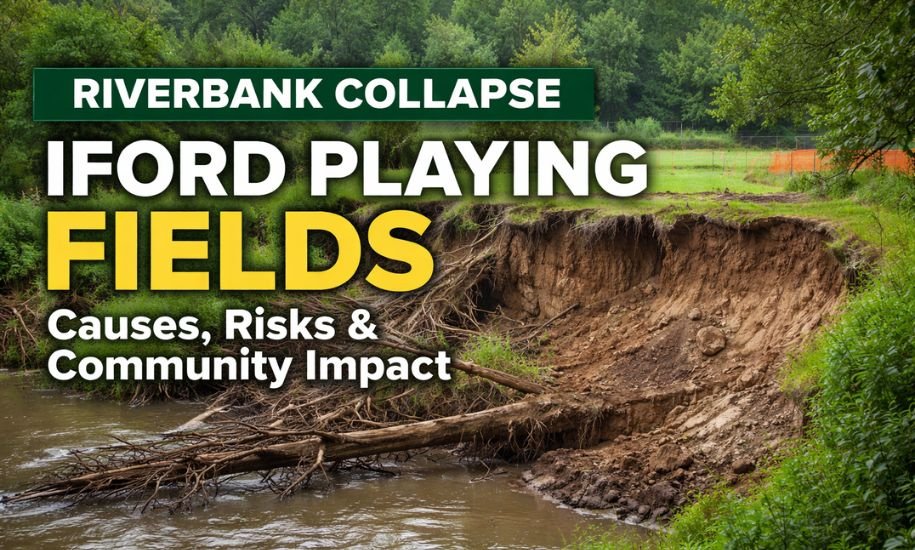
The collapse highlighted how quickly conditions can change. Sections of the riverbank gave way, leaving exposed soil faces and fallen vegetation along the water’s edge. For many locals, the incident raised questions about safety, future access, and whether similar collapses could occur elsewhere along the river corridor.
What Happened: Timeline of the Riverbank Collapse
Early signs of erosion were reportedly visible before the main collapse occurred. Gradual undercutting at the base of the riverbank weakened the soil structure over time. Heavy rainfall and fluctuating river levels likely accelerated this process, increasing the weight of saturated ground while washing away the bank’s lower support.
When the collapse finally happened, it appeared sudden. Trees leaned or fell into the river, and a previously stable stretch of land shifted dramatically. Residents noticed significant changes almost overnight, which gave the impression of a single event even though the underlying causes had been developing for months or years.
Such collapses are often the result of cumulative stress rather than one extreme moment. Understanding this timeline helps explain why monitoring and early intervention are so important in floodplain environments.
The Science Behind Riverbank Collapse
Riverbank failure occurs when the forces holding soil in place are weaker than the forces pulling it downward or outward. Flowing water erodes the base of the bank, a process known as toe erosion. As the lower section disappears, the upper layers lose support and eventually slump toward the river.
Saturation plays a major role. After heavy rainfall, water fills the tiny spaces between soil particles, increasing internal pressure and reducing cohesion. This makes the bank heavier and more prone to sliding. Vegetation usually provides natural reinforcement because roots bind soil together, but when plants are damaged or removed, stability can decrease.
The collapse at Iford Playing Fields demonstrates how natural erosion processes can escalate rapidly when combined with environmental stressors. It also shows that riverbanks are not static features; they constantly reshape themselves as rivers shift and adjust their course.
Environmental and Climate Factors
Many observers have linked the incident to broader environmental trends. Changing rainfall patterns, more intense storms, and longer periods of wet weather all contribute to riverbank instability. When soil remains saturated for extended periods, even moderate river flows can trigger structural failure.
Climate variability has also influenced vegetation growth cycles, which affects how well plant roots stabilize river edges. In some areas, seasonal flooding has become less predictable, creating conditions where banks erode faster than they can naturally rebuild.
While it is difficult to attribute a single collapse solely to climate change, the growing frequency of extreme weather events suggests that similar incidents may become more common in the future. For communities living near rivers, this raises important questions about long-term planning and resilience.
Human Activity and Its Influence
Natural forces are only part of the story. Human use of riverside areas can also contribute to instability. Foot traffic close to the edge of the bank compacts soil and damages vegetation, reducing the protective layer that prevents erosion. Drainage alterations, landscaping, or nearby development may change how water flows across the land, sometimes concentrating runoff in ways that accelerate erosion.
At Iford Playing Fields, recreational use is an essential part of the site’s identity, but it also highlights the challenge of maintaining safe access without harming the environment. Balancing public enjoyment with ecological protection requires careful planning, including designated pathways, buffer zones, and regular inspections.
Safety Concerns for the Community
One of the most immediate impacts of the collapse is the risk posed to visitors. Newly exposed edges can be unstable, and the ground near the collapse may continue shifting even after the main event. Walkers, cyclists, and families using the playing fields need clear guidance about which areas are safe to access.
Local authorities often respond to such incidents by installing temporary barriers, warning signs, or rerouting paths. These measures aim to reduce accidents while experts assess the stability of the remaining bank. Public awareness plays a vital role, as people may not realize that ground which appears solid can suddenly give way.
Beyond physical safety, the collapse has also affected how the community perceives the landscape. Areas once considered calm and predictable now feel uncertain, reminding residents that natural environments are constantly evolving.
Ecological Impact on the River and Surrounding Habitat
Riverbank collapse can have mixed ecological consequences. On one hand, fallen trees and exposed soil may disrupt habitats and increase sediment levels in the water, potentially affecting aquatic life. On the other hand, natural erosion is part of a river’s lifecycle and can create new habitats for plants and animals.
The challenge lies in deciding when to intervene. Too much engineering can reduce biodiversity and alter natural flow patterns, while doing nothing may increase safety risks or threaten nearby infrastructure. Many modern restoration strategies aim to combine natural processes with targeted stabilization, allowing rivers to remain dynamic while protecting public spaces.
Potential Solutions and Restoration Approaches
Addressing riverbank collapse requires a combination of short-term safety measures and long-term environmental planning. Engineers and environmental specialists often consider both hard and soft stabilization techniques.
Hard engineering solutions include rock armour, retaining structures, and reshaping the slope to reduce pressure on the bank. These methods can provide immediate stability but may alter the natural appearance of the landscape.
Nature-based solutions focus on planting deep-rooted vegetation, installing biodegradable erosion-control materials, and encouraging natural regeneration. These approaches aim to strengthen the bank gradually while preserving the ecological character of the area.
For Iford Playing Fields, a hybrid approach may offer the best outcome. Protecting public safety while maintaining the natural beauty of the river corridor requires collaboration between environmental experts, local authorities, and community members.
Lessons for Managing Riverside Public Spaces
The incident offers valuable lessons for other riverside locations. First, regular monitoring is essential. Small cracks, leaning trees, or unusual water flow patterns can indicate early stages of instability. Second, design choices matter. Creating buffer zones between recreational areas and river edges reduces the risk of sudden collapse affecting visitors.
Education is another key factor. When communities understand how rivers naturally change over time, they are more likely to support sustainable management practices. Clear communication about risks and restoration plans can help build trust and encourage responsible use of shared outdoor spaces.
Looking Ahead: The Future of Iford Playing Fields
As restoration efforts move forward, the collapse may ultimately reshape how the playing fields are managed. Some sections of the riverbank may be redesigned to allow natural erosion while protecting key areas used for recreation. Others may require reinforcement to prevent further loss of land.
The situation serves as a reminder that landscapes are not fixed. Rivers carve their paths slowly but relentlessly, and even well-loved community spaces must adapt to these natural forces. By combining scientific understanding with thoughtful planning, it is possible to create resilient environments that remain safe and welcoming for years to come.
In many ways, the story of the riverbank collapse at Iford Playing Fields reflects a broader challenge faced by communities across the country. As weather patterns shift and environmental pressures grow, maintaining the balance between nature and public access becomes increasingly complex. Platforms like Anglia Times continue to explore these issues, highlighting how local events connect to larger environmental trends and encouraging meaningful conversations about sustainable land management.
The collapse is not just a local incident; it is a case study in how communities respond to environmental change. By learning from what happened and investing in responsible restoration, the future of Iford Playing Fields can remain bright while respecting the natural processes that shaped the landscape in the first place. Coverage and discussions shared through Anglia Times help bring awareness to these evolving challenges, ensuring that readers stay informed about the intersection of nature, safety, and community life.
