
Rising prices, higher energy bills, and ongoing economic pressure have made financial support programs a major topic for households across the UK and other regions. As inflation continued to affect everyday essentials, many people searched for updates about cost of living payments 2025 — wondering whether new payments would be issued, who would qualify, and how support systems have changed compared to previous years.
This detailed guide explains the latest developments, reported payments, eligibility trends, and the broader policy shift behind cost-of-living assistance in 2025.
Understanding Cost of Living Payments
Cost of living payments are direct financial support schemes designed to help low-income households manage essential expenses. These payments gained widespread attention during earlier years when governments introduced lump-sum financial boosts to offset soaring energy prices and rising food costs.
The purpose of these payments has generally been to:
- Reduce financial pressure on vulnerable households
- Help people cover essentials such as rent, groceries, and utility bills
- Provide temporary relief during periods of high inflation
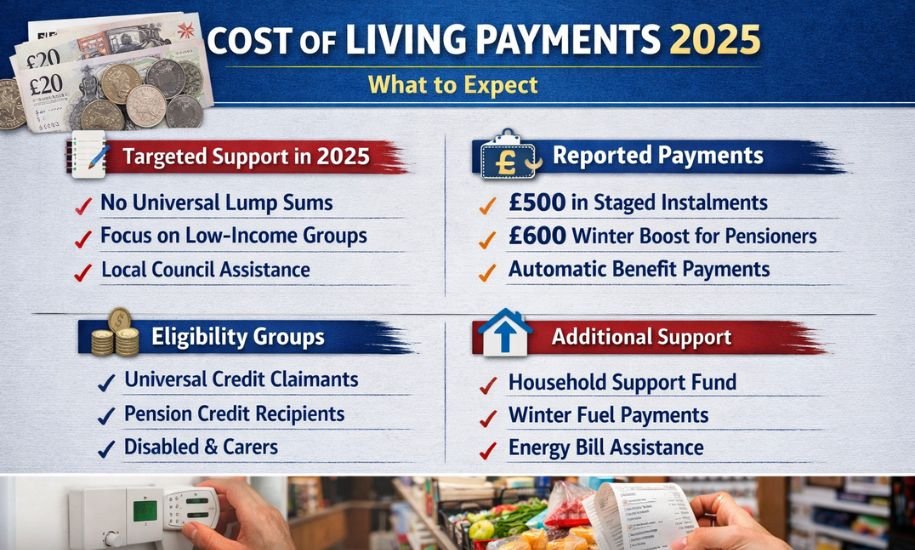
However, by 2025, the structure of these payments began evolving. Instead of large universal payouts, support increasingly shifted toward targeted assistance and smaller programs tailored to specific groups.
Why Cost of Living Payments Changed in 2025
One of the biggest themes surrounding cost of living payments in 2025 is the shift away from broad nationwide payments toward more focused support measures.
During earlier phases, many households received automatic lump-sum payments regardless of individual circumstances as long as they met general eligibility criteria. But economic policy adjustments meant that governments began prioritizing long-term support systems rather than repeating large emergency payouts.
Several factors influenced this shift:
- Economic Stabilization Efforts
Inflation slowed compared to peak crisis periods, leading policymakers to reduce widespread emergency payments. - Targeted Budget Allocation
Financial support began focusing more on people receiving means-tested benefits, disabled individuals, and pensioners. - Integration With Existing Benefits
Instead of separate payments, assistance was often delivered through increased benefits, winter grants, or local support funds.
For many households, this created confusion because headlines about “new payments” circulated online even as official strategies became more selective.
Reported £500 Cost of Living Payments in 2025
Across various blogs and financial news sources, one of the most discussed topics has been the possibility of a £500 cost of living payment during 2025.
These reports often describe a staged payment structure rather than a single lump sum. While details vary between sources, common features include:
- Payments divided into multiple instalments throughout the year
- Automatic deposits for eligible benefit claimants
- No application process required
Some reports suggest that instalments could include:
- A spring payment for immediate support
- A summer top-up to help with ongoing costs
- An additional seasonal payment later in the year
Eligibility is frequently linked to individuals receiving certain benefits such as Universal Credit, income-based support allowances, pension credit, or disability-related benefits.
It’s important to understand that blog-style websites often present these payments as confirmed nationwide schemes, while policy discussions indicate that support may differ depending on local programs or updated government decisions.
Autumn and Winter Payment Windows
Another common topic within cost of living payments 2025 discussions involves specific payment windows — especially during autumn and winter.
Some reports describe payments rolling out between late September and mid-October, typically deposited automatically into recipients’ bank accounts. These payments are usually described as:
- Tax-free
- Non-repayable
- Separate from regular benefit payments
Seasonal assistance remains a key strategy because colder months typically bring higher energy costs. Winter-focused payments or boosts are often designed to help households manage heating bills and increased living expenses during the colder season.
The Role of Winter Support and Pensioner Payments
In addition to general cost of living payments, winter support schemes continue to play a major role in financial assistance during 2025.
Many pension-age households rely on winter fuel support programs that help cover heating costs. Reports about a possible £600 winter boost have circulated widely, suggesting additional help for pensioners and some low-income benefit claimants.
These winter payments are often grouped under the broader “cost of living support” category, even though they may technically belong to separate assistance programs. This overlap can make it difficult for readers to distinguish between new cost of living payments and existing seasonal schemes.
Household Support Funds and Local Assistance
A major trend in 2025 is the growing importance of local council support funds. Rather than distributing a single nationwide payment, authorities have increasingly relied on community-level assistance programs.
Household Support Funds may provide:
- Grocery vouchers
- Energy bill assistance
- Emergency cash payments
- Help with school meals or children’s essentials
These programs are designed to reach households facing immediate financial hardship and often operate alongside national benefits. Because they are administered locally, eligibility criteria and payment amounts can vary significantly.
This decentralized approach represents a shift toward targeted help — ensuring support reaches those who need it most without committing to broad nationwide payments.
Who Qualifies for Cost of Living Payments in 2025?
Although eligibility rules differ depending on the specific payment or fund, several common criteria appear across most reports.
Typical qualifying groups include:
- Individuals receiving means-tested benefits
- Low-income households
- Pension credit recipients
- Disabled individuals receiving support payments
- Carers and those providing long-term assistance
Payments are usually issued per household rather than per person, meaning only one payment may be made even if multiple individuals within the same household receive qualifying benefits.
Another key factor is the “qualifying period.” Many schemes assess eligibility based on whether a person was receiving benefits during a specific timeframe, rather than their current status at the time of payment.
Automatic Payments vs Applications
One positive feature of most cost of living payments is the automatic payment process. Eligible recipients generally do not need to apply, which reduces stress and ensures faster delivery.
Payments are typically made directly to bank accounts linked to benefit systems. However, individuals should remain cautious about scams, as fake messages or websites sometimes claim to offer application forms for payments that are actually automatic.
Understanding this distinction helps households avoid fraud while staying informed about genuine support opportunities.
Challenges and Public Reaction
The evolving structure of cost of living payments has sparked mixed reactions among the public.
Some households appreciate the move toward targeted assistance, arguing that it ensures resources reach the most vulnerable people. Others feel that the reduction in large universal payments makes it harder for middle-income families to cope with ongoing price increases.
Common concerns include:
- Confusion caused by conflicting online reports
- Uncertainty about eligibility
- Differences between national and local support schemes
Because many blog websites publish payment updates with varying levels of accuracy, readers are encouraged to verify information through official sources before making financial decisions.
What Cost of Living Payments Mean for 2025 and Beyond
Looking ahead, cost of living payments appear likely to remain part of broader social support strategies — but not necessarily in the same form as earlier years.
Instead of recurring large lump-sum payments, future assistance may focus on:
- Benefit adjustments tied to inflation
- Seasonal support programs
- Localized aid for households facing financial emergencies
For many families, this means financial support will continue, but in a more structured and targeted way.
As discussions around economic recovery and inflation continue, the concept of cost of living payments is evolving from emergency relief into a more integrated system of long-term financial support.
Final Thoughts
The topic of cost of living payments 2025 remains one of the most searched financial issues because households are still navigating higher living expenses and changing government policies. While earlier years featured large nationwide payments, 2025 reflects a transition toward targeted aid, seasonal support, and local assistance programs.
Understanding these changes is essential for anyone trying to plan their finances or stay informed about available help. Whether through staged payments, winter fuel support, or household assistance funds, financial relief continues to play an important role for many people.
For more in-depth updates, analysis, and simplified financial news guides, readers can explore helpful content published on Anglia Times, where ongoing developments related to cost of living support are regularly discussed in clear and accessible language.
