
Earth control measures play a vital role in protecting land, water resources, and ecosystems from the harmful effects of soil erosion and uncontrolled runoff. As construction activities, urban development, and intensive agriculture continue to expand, the need for effective earth control strategies has never been greater. Without proper control measures, disturbed land can lead to severe environmental damage, economic loss, and long-term degradation of natural resources.
This article provides a comprehensive overview of earth control measures, explaining their meaning, importance, types, implementation methods, benefits, and future trends. Whether you are a construction professional, environmental planner, student, or landowner, understanding earth control measures is essential for sustainable land management.
What Is an Earth Control Measure?
An earth control measure refers to any method, practice, or system used to prevent soil erosion, manage sediment movement, and control surface runoff caused by land-disturbing activities. These measures are designed to stabilize soil, reduce the transportation of sediment, and protect nearby water bodies such as rivers, lakes, and drainage systems.
Earth control measures are commonly applied in:
- Construction and infrastructure projects
- Agricultural and farming operations
- Mining and quarrying activities
- Road development and land grading
- Urban and residential developments
When land is disturbed, natural soil structure weakens. Rainfall, wind, and gravity can then carry soil particles away, leading to erosion. Earth control measures work by either protecting the soil surface, slowing down water flow, or physically containing sediment before it spreads.
Why Earth Control Measures Are Important
1. Prevention of Soil Erosion
Soil erosion removes the nutrient-rich topsoil that is essential for plant growth. Over time, this can lead to reduced agricultural productivity and land degradation. Earth control measures help preserve soil structure and fertility.
2. Protection of Water Quality
Sediment runoff often carries pollutants such as fertilizers, chemicals, and heavy metals into water bodies. This can harm aquatic life and contaminate drinking water sources. Proper earth control measures prevent sediment from entering waterways.
3. Flood Risk Reduction
Uncontrolled runoff increases the risk of flooding, especially in urban and sloped areas. Earth control systems help regulate water flow, allowing rainfall to infiltrate the ground more effectively.
4. Compliance With Environmental Regulations
Many countries and local authorities require erosion and sediment control plans for construction projects. Implementing earth control measures helps ensure legal compliance and avoids penalties.
5. Long-Term Cost Savings
Preventing erosion is far more cost-effective than repairing damaged infrastructure, restoring land, or cleaning polluted water systems. Earth control measures reduce maintenance and rehabilitation costs.
Main Types of Earth Control Measures
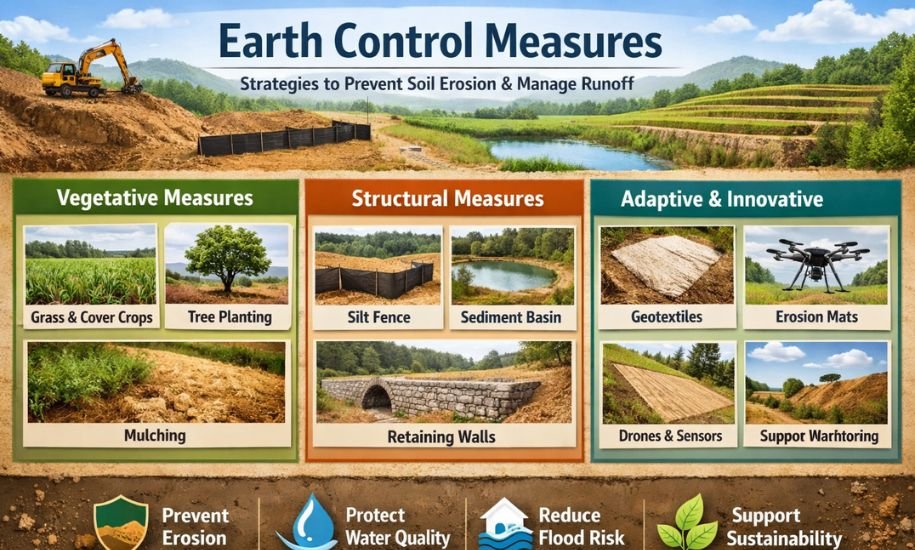
Earth control measures can be broadly classified into vegetative, structural, drainage-based, and advanced or innovative methods. Often, a combination of these approaches is used for best results.
Vegetative Earth Control Measures
Vegetative measures use plants and organic materials to protect soil naturally. These methods are environmentally friendly and highly effective when properly maintained.
Grass and Ground Cover
Grass acts as a natural shield against rain impact and wind. The roots bind soil particles together, reducing erosion on slopes and open land.
Cover Crops
Cover crops are planted between main crop cycles to protect soil from exposure. They reduce erosion, improve soil structure, and enhance organic content.
Tree and Shrub Planting
Trees and shrubs provide long-term stabilization. Their deep root systems strengthen soil and reduce the likelihood of landslides on steep slopes.
Mulching
Mulch, such as straw or wood chips, covers exposed soil and reduces moisture loss while protecting against erosion.
Vegetative earth control measures are widely used in agriculture, landscaping, and post-construction land restoration.
Structural Earth Control Measures
Structural measures involve engineered solutions designed to physically control soil and water movement. These are commonly used in construction and infrastructure projects.
Silt Fences
Silt fences are temporary barriers made from geotextile fabric. They trap sediment while allowing water to pass through slowly.
Sediment Basins and Traps
These are shallow basins designed to capture runoff water and allow sediment to settle before water exits the site.
Retaining Walls
Retaining walls hold soil in place on steep slopes and prevent soil movement caused by gravity and water pressure.
Terracing
Terracing reshapes slopes into a series of steps, reducing water speed and minimizing erosion on hillsides.
Structural earth control measures are particularly useful where soil disturbance is significant and immediate stabilization is required.
Drainage and Runoff Management Measures
Managing water flow is a key aspect of earth control measures. Proper drainage systems prevent water accumulation and excessive runoff.
Swales and Channels
Swales are shallow channels that guide water safely across land while reducing erosion.
Culverts
Culverts allow water to pass under roads or embankments without eroding surrounding soil.
French Drains
These gravel-filled trenches redirect water away from vulnerable areas, preventing soil saturation and erosion.
Stormwater Management Systems
Urban developments often use advanced drainage systems to control runoff and reduce flood risks.
Effective drainage ensures that water is managed rather than allowed to damage soil and infrastructure.
Advanced and Innovative Earth Control Measures
Modern technology has introduced new approaches to earth control measures that enhance efficiency and sustainability.
Geotextiles
Geotextile fabrics reinforce soil, improve stability, and prevent erosion. They are commonly used under roads and embankments.
Erosion Control Mats
Biodegradable mats protect soil while vegetation establishes itself. Over time, they naturally decompose.
Monitoring Technology
Drones, sensors, and digital mapping tools help identify erosion risks and monitor the effectiveness of control measures in real time.
Eco-Friendly Materials
Sustainable materials are increasingly used to reduce environmental impact while maintaining soil stability.
These innovations are shaping the future of earth control practices worldwide.
How to Implement Earth Control Measures Effectively
Successful implementation of earth control measures requires proper planning and maintenance.
Step 1: Site Assessment
Analyze soil type, slope, rainfall patterns, and water flow. Identifying risk areas is crucial.
Step 2: Planning and Design
Select appropriate measures based on site conditions. A mix of vegetative and structural methods often works best.
Step 3: Installation
Install control measures before major land disturbance begins to prevent early erosion.
Step 4: Monitoring and Maintenance
Regular inspections are necessary, especially after heavy rainfall. Damaged systems must be repaired promptly.
Ignoring maintenance can render even the best earth control measures ineffective.
Applications of Earth Control Measures
Construction Projects
Earth control measures are essential during excavation, grading, and foundation work to prevent sediment runoff.
Agriculture
Farmers use contour farming, cover crops, and mulching to protect soil and maintain productivity.
Urban Development
Cities rely on stormwater management systems and green spaces to control runoff and erosion.
Infrastructure and Roads
Highways, bridges, and railways require strong earth control strategies to ensure long-term stability.
Environmental and Economic Impact
Environmental Benefits
- Preserves ecosystems and biodiversity
- Protects water bodies from pollution
- Maintains soil health and fertility
Economic Benefits
- Reduces repair and maintenance costs
- Prevents loss of valuable land
- Supports sustainable development and agriculture
Earth control measures are not just environmental tools—they are long-term investments.
Future Trends in Earth Control Measures
The future of earth control measures focuses on sustainability, technology, and efficiency. Increased use of smart monitoring systems, biodegradable materials, and integrated land-use planning will continue to improve erosion control outcomes.
As climate change intensifies rainfall patterns and extreme weather events, the importance of robust earth control measures will only grow.
Final Thoughts
Earth control measures are a fundamental part of responsible land management. From simple vegetation planting to advanced engineering systems, these measures protect soil, water, and infrastructure from irreversible damage. Whether applied in construction, agriculture, or urban development, earth control measures ensure environmental balance and long-term sustainability.
At angliatimes, we believe that spreading awareness about environmental protection practices like earth control measures is essential for a sustainable future. By understanding and implementing these strategies, individuals and organizations can contribute to healthier ecosystems and resilient landscapes.
As discussed on angliatimes, adopting proper earth control measures is not just an environmental responsibility—it is a necessity for sustainable growth and development in today’s rapidly changing world.
