
Introduction
The word Nativität carries a depth of meaning that reaches far beyond its simple translation as “birth.” Rooted in ancient language, theology, art, and cultural tradition, Nativität has shaped religious belief, inspired masterpieces of art, and influenced how societies understand beginnings, identity, and hope. While the term appears in several contexts—linguistic, astrological, philosophical—it is most powerfully associated with the Christian story of the birth of Jesus Christ, an event commemorated worldwide during Christmas.
This article explores Nativität in a comprehensive way: its linguistic origins, theological significance, artistic interpretations, cultural expressions, and its relevance in the modern world. By understanding Nativität, we gain insight not only into a foundational Christian narrative but also into a universal human fascination with origins and new beginnings.
The Meaning and Origin of “Nativität”
The term Nativität comes from the Latin nativitas, meaning birth, origin, or act of being born. In German, Nativität traditionally refers to the circumstances surrounding a birth. Historically, the word has been used in three main contexts:
- General birth – the biological or historical fact of being born
- Astrological nativität – a birth chart calculated at the moment of birth
- Religious Nativität – the birth of Jesus Christ
Over time, the religious meaning became the most dominant, especially in Christian Europe. When capitalized or used in theological contexts, Nativität almost always refers to the Nativity of Christ.
Nativität in Christian Theology
The Birth of Jesus Christ
In Christianity, Nativität refers specifically to the birth of Jesus in Bethlehem, as described in the Gospels of Matthew and Luke. According to Christian belief, this moment marks the Incarnation—God entering human history in human form.
This event is celebrated annually as Christmas, making the Nativity one of the most important events in the Christian calendar.
Theological Importance
The Nativität is not merely a historical birth; it carries deep theological meaning:
- Incarnation – God becomes human
- Fulfillment of prophecy – ancient biblical prophecies are realized
- Salvation – the beginning of humanity’s redemption
- Humility – the divine is revealed through simplicity
The setting of the Nativity—humble surroundings, a manger, shepherds—emphasizes values such as humility, compassion, and accessibility.
Biblical Sources of the Nativität
The story of the Nativity appears primarily in two biblical texts:
- The Gospel of Matthew – emphasizes royal lineage, prophecy, and the visit of the Magi
- The Gospel of Luke – focuses on humility, the shepherds, and social inclusion
Though the accounts differ in details, together they form the foundation of the traditional Nativity narrative known today.
Nativität and Christmas Traditions
Nativity Scenes (Krippen)
One of the most recognizable expressions of Nativität is the Nativity scene, often displayed in homes, churches, and public spaces during Christmas. These scenes typically include:
- Mary and Joseph
- The infant Jesus
- Shepherds and angels
- The Magi (Wise Men)
- Animals
Nativity scenes serve both as religious symbols and cultural artifacts, helping pass the story of the Nativity from generation to generation.
Nativity Plays
Nativity plays reenact the birth of Jesus and are especially common in schools and churches. The tradition dates back to the 13th century and continues today as a way to combine education, worship, and community participation.
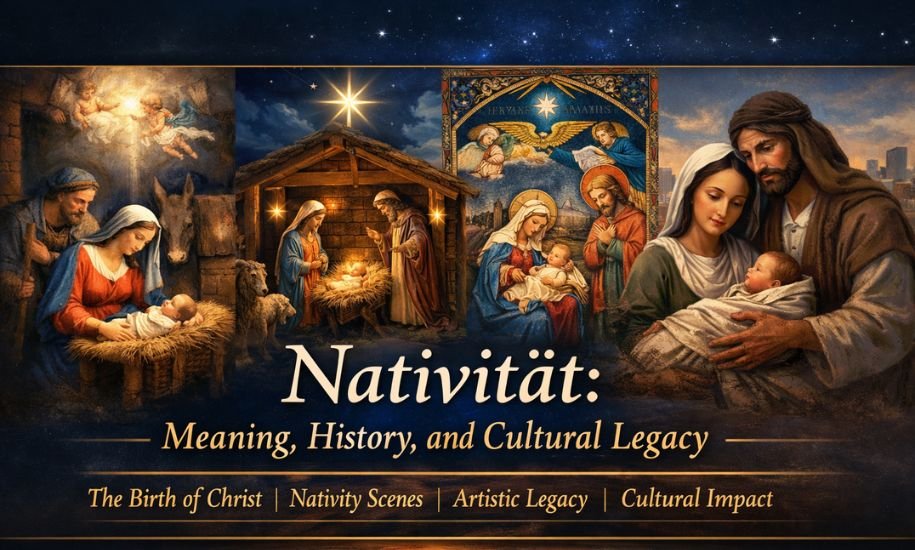
Artistic Representations of the Nativität
Early Christian Art
The earliest depictions of the Nativity appeared in catacombs and manuscripts. These were simple and symbolic, focusing more on meaning than realism.
Medieval Art
During the Middle Ages, Nativity art became more detailed and emotional. Artists emphasized divine symbolism, halos, and sacred geometry.
Renaissance Masterpieces
The Renaissance brought realism, perspective, and human emotion into Nativity art. Famous painters portrayed the Holy Family with warmth, intimacy, and dramatic lighting, making the scene relatable and deeply human.
Modern Interpretations
Contemporary artists reinterpret the Nativität through modern cultural lenses—placing the Nativity in refugee camps, urban settings, or abstract forms to express themes of displacement, hope, and social justice.
Nativität in Music and Literature
Sacred Music
Many of the world’s most beloved Christmas carols are inspired by the Nativity story. These compositions reflect joy, reverence, and celebration.
Literature and Poetry
Writers and poets have long used Nativität as a metaphor for spiritual rebirth, innocence, and divine mystery. From medieval hymns to modern prose, the Nativity continues to inspire reflection and creativity.
Astrological Meaning of Nativität
Outside theology, Nativität also has an astrological meaning. In astrology, a natal chart (sometimes called a nativität) maps the position of celestial bodies at the time of birth. While unrelated to Christian theology, this usage reinforces the broader theme of origins and destiny.
Cultural Interpretations Across the World
Although rooted in Christianity, the idea of Nativität has crossed cultural boundaries:
- In Europe, Nativity traditions are deeply woven into Christmas markets and folklore
- In Latin America, elaborate Nativity displays and reenactments are central to Christmas celebrations
- In Africa and Asia, the Nativity is often depicted using local clothing, architecture, and artistic styles
These adaptations show how Nativität remains a living, evolving concept rather than a static historical event.
Symbolism of the Nativität
The Nativity is rich in symbolic meaning:
- Light – hope entering darkness
- Child – innocence and new beginnings
- Manger – humility and simplicity
- Shepherds – inclusion of the marginalized
Because of this symbolism, Nativität resonates even with people who do not identify as religious.
Nativität in the Modern World
In today’s increasingly secular societies, the Nativität still holds relevance. It appears in art exhibitions, interfaith discussions, philosophical debates, and humanitarian narratives. The story is often used to highlight themes of compassion, migration, poverty, and peace.
Even outside churches, Nativity imagery continues to spark conversations about values, identity, and shared human experiences.
The Enduring Power of Nativität
What makes Nativität timeless is its universality. At its core, it is a story about birth, hope, and transformation—experiences that transcend religion and culture. Whether viewed through faith, art, history, or symbolism, the concept of Nativität continues to speak to the human condition.
Conclusion
The concept of Nativität stands at the intersection of theology, culture, art, and human emotion. From its linguistic roots to its profound role in Christian belief, from Renaissance paintings to modern reinterpretations, the Nativity remains one of the most influential narratives in human history.
As societies change, the meaning of Nativität continues to evolve—yet its central message of hope, humility, and new beginnings remains unchanged. Articles like this aim to preserve and explore that legacy, and platforms such as angliatimes play an important role in sharing thoughtful reflections on timeless themes with a global audience.
